Most visitors see Grand Teton and Yellowstone in July. I think the parks are at their best in January. The crowds are gone, fresh snow cleans up every background, and the animals that stay are pushed down into the open valleys where you can actually see them. It is also the hardest season to photograph well. The cold drains batteries, bright snow fools your meter, and the good light only lasts a few hours a day.
These are notes from several winters of shooting between Grand Targhee, Grand Teton National Park and Yellowstone, and the frames that came out of them.
The bear everyone knew
No animal in this valley drew more photographers than Grizzly 399. Born in 1996 near Pilgrim Creek, she spent her life raising cubs within sight of park roads, which made her the most famous grizzly in the world and the reason crowds lined the highway every spring.
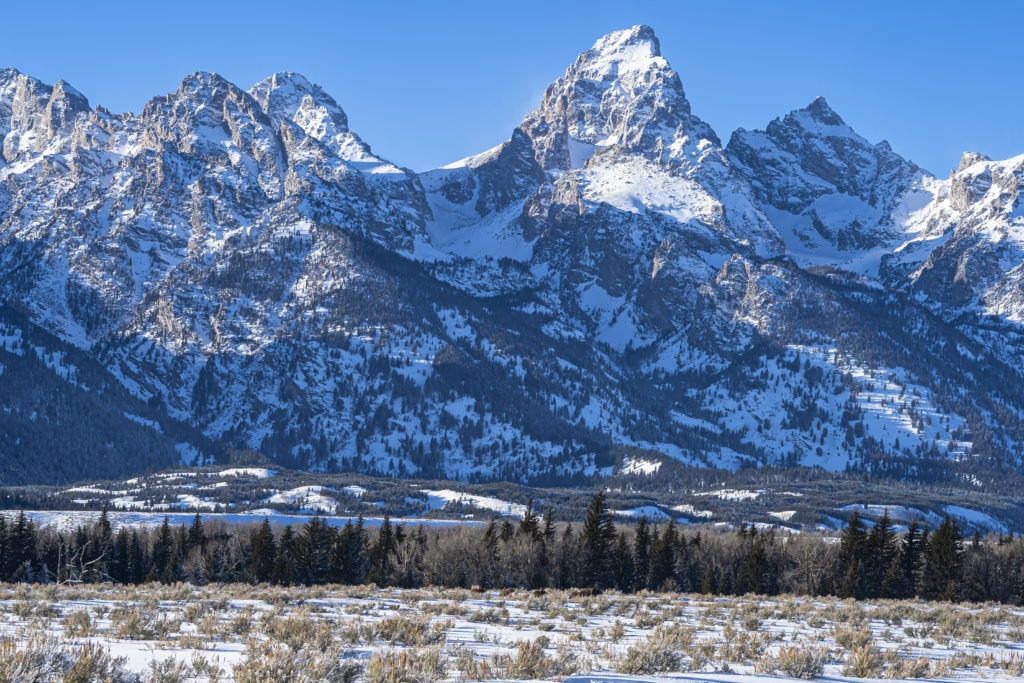
In 2020 she came out of her den with four cubs, an unusually large litter for a grizzly, and that December I photographed the family moving through the snowy sagebrush below the Grand Teton. At that distance the bears are almost lost in the frame, and that is the point. The picture is about how much country one family of bears needed, and how close all of it sits to the road.
She was struck and killed by a vehicle in the Snake River Canyon south of Jackson on October 22, 2024. She was 28, the oldest known grizzly mother on record. That is why this frame stays in my portfolio. It records something no one will photograph again.
Where the animals go in winter
In winter almost all of Yellowstone closes to cars. The only road open to regular vehicles runs from the North Entrance at Gardiner, Montana, through Mammoth Hot Springs, Tower Junction and the Lamar Valley to the Northeast Entrance near Cooke City. For winter wildlife photography that one road is the whole game, and it is a good one. Elk, bison, coyotes and wolves move down out of the high country into the valley bottoms, where the snow is shallower and food is easier to reach.
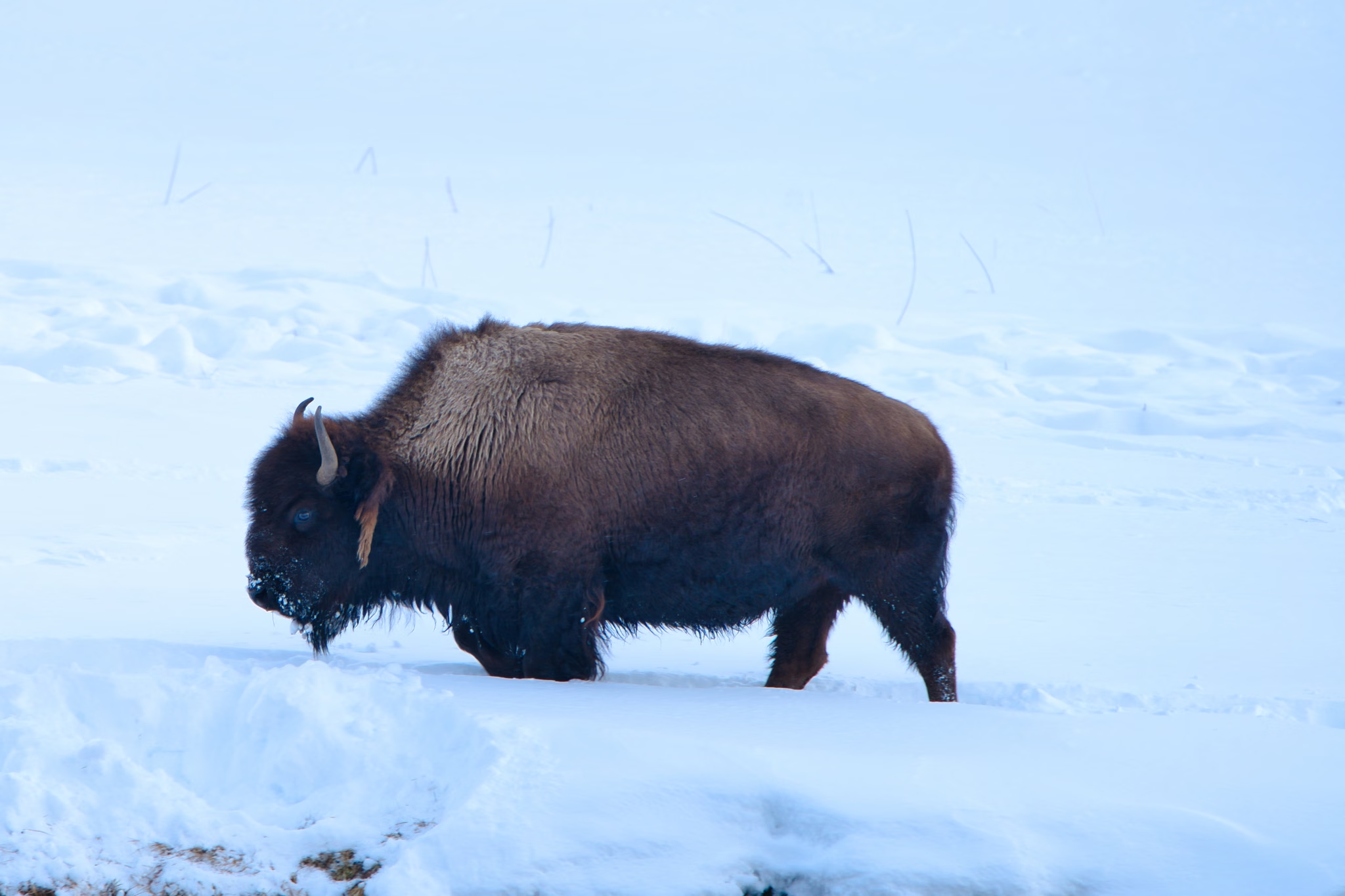
Bison are the easiest subject and the hardest to make interesting. They are everywhere and they barely move. The frame at the top of this post is the kind I look for: one animal against a clean white field, side-on and low, so the hump and the frost on its coat read at a glance. Work from the car or a plowed pullout, keep the background empty, and wait for the head to come up out of the snow.
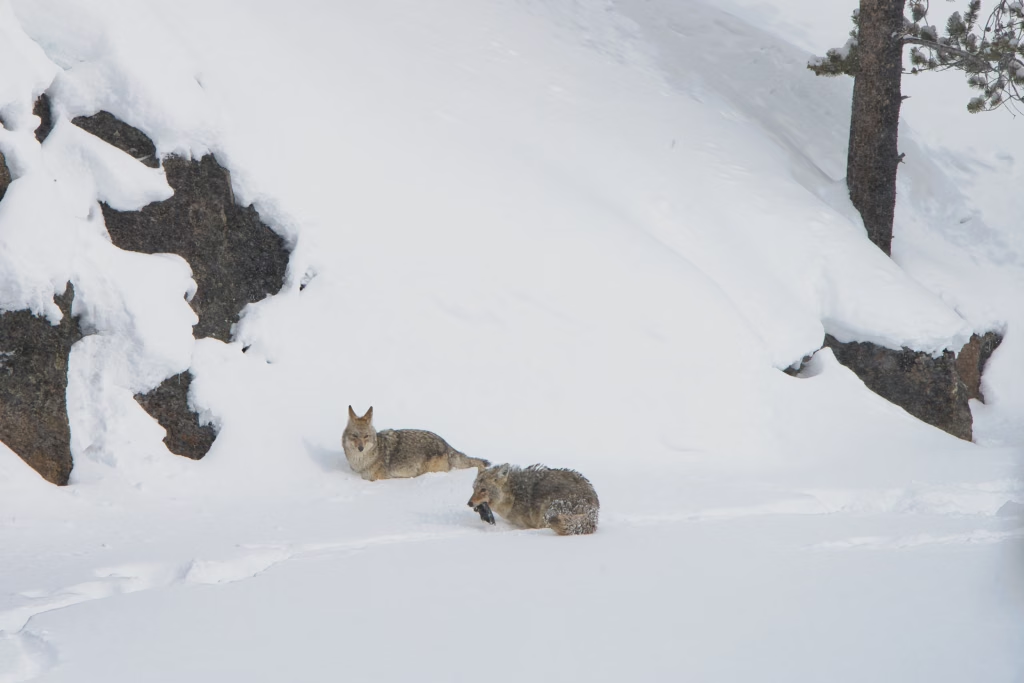
Coyotes are the opposite. They are quick, they hunt by sound, and when one hears a vole under the snow it freezes, leans in and pounces. Watch long enough and you learn the tell: the head tilts, the ears lock forward, and you have about two seconds. Keep the focus point on the animal, use a fast shutter speed, and shoot the whole sequence.
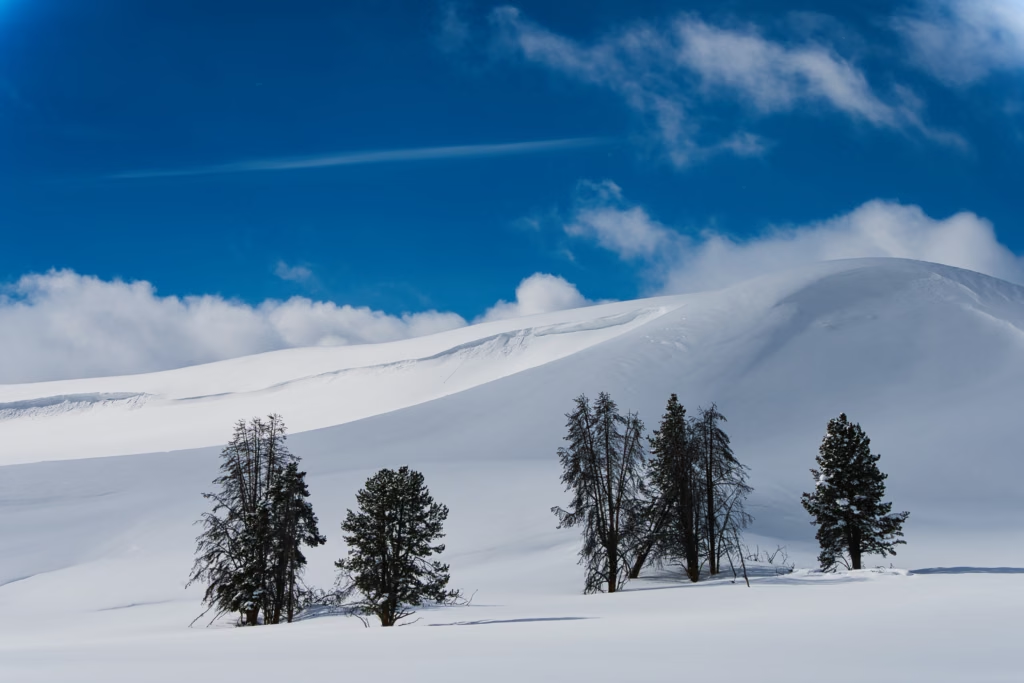
The landscape between the animals is worth your attention too. Wind sculpts the snow into ripples and cornices, and a single tree on a white ridge can carry a frame on its own. On flat, overcast days, when the wildlife is hiding, those are the pictures I go looking for.
The rules make better pictures
Both parks require you to stay at least 100 yards from bears and wolves and 25 yards from all other wildlife, whether you are on foot or in a car. I treat that as a creative rule as much as a legal one. An animal that does not know you are there behaves naturally, and natural behavior is the only thing that makes a wildlife frame worth keeping. A long telephoto lens does the rest.
If an animal changes what it is doing because of you, you are too close. Back off and let the next frame come to you.
Exposing for snow
- Add exposure. Camera meters try to turn snow gray. Dial in one to two stops of positive exposure compensation and judge by the histogram, not the screen.
- Protect the highlights. Bright snow clips fast in midday sun. Keep the right edge of the histogram just short of the wall.
- Watch the white balance. Snow in shade goes blue. Sometimes that cold cast is the mood you want. When it is not, warm it slightly in the edit rather than in camera.
- Keep spare batteries warm. Cold drains them quickly. Carry them in an inside pocket and swap them often.
- Warm the camera slowly. Before you go indoors, seal it in a bag so condensation forms on the bag instead of inside the lens.
The Grand Teton at first light
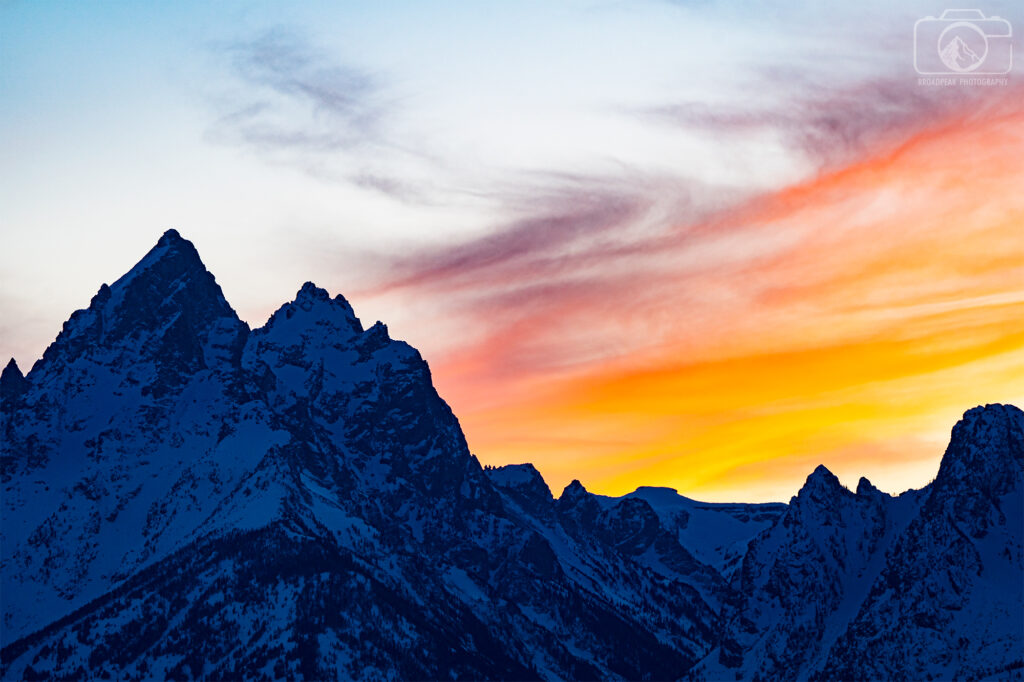
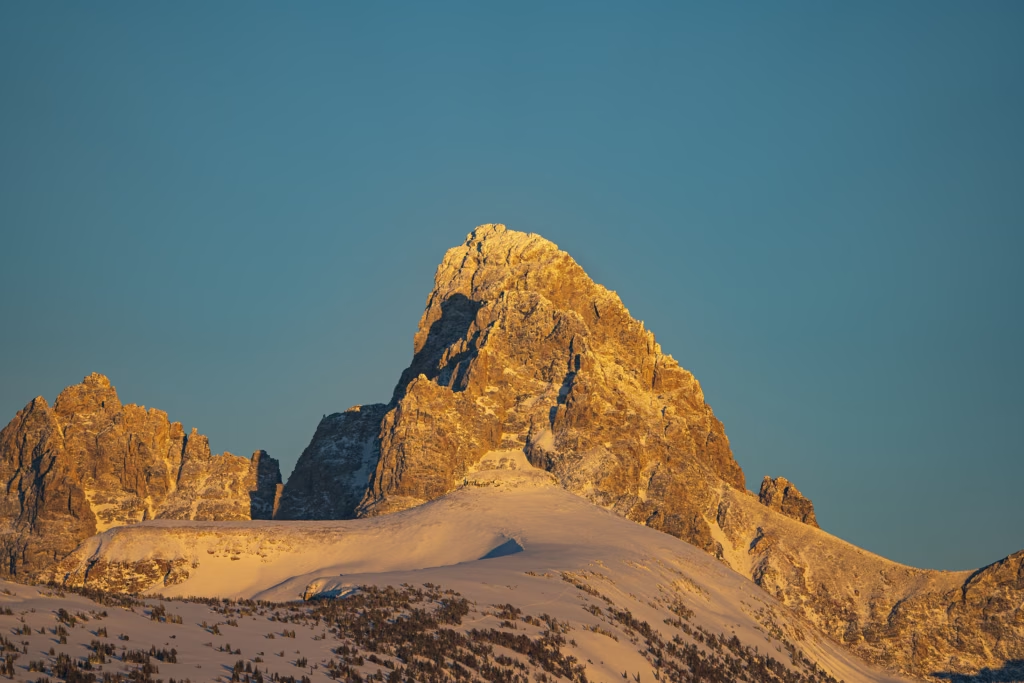
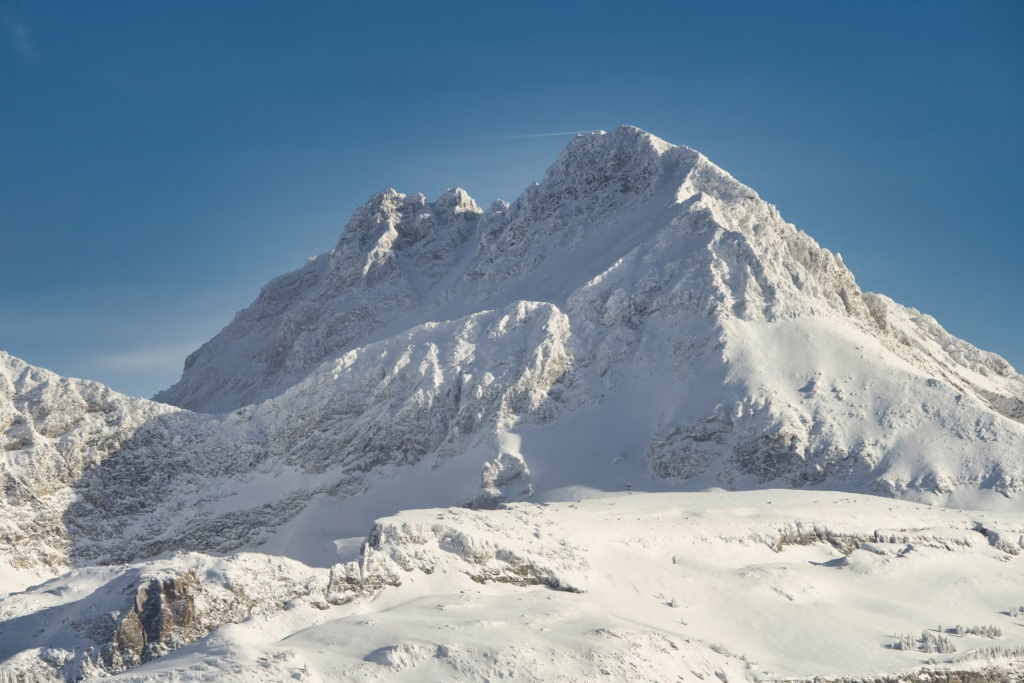
On a clear winter morning the first sun reaches the summit of the Grand Teton while everything below it is still in blue shadow. For a few minutes the rock turns gold, then pink, then fades to daylight. That is the moment in the frame below, made in early March 2021.
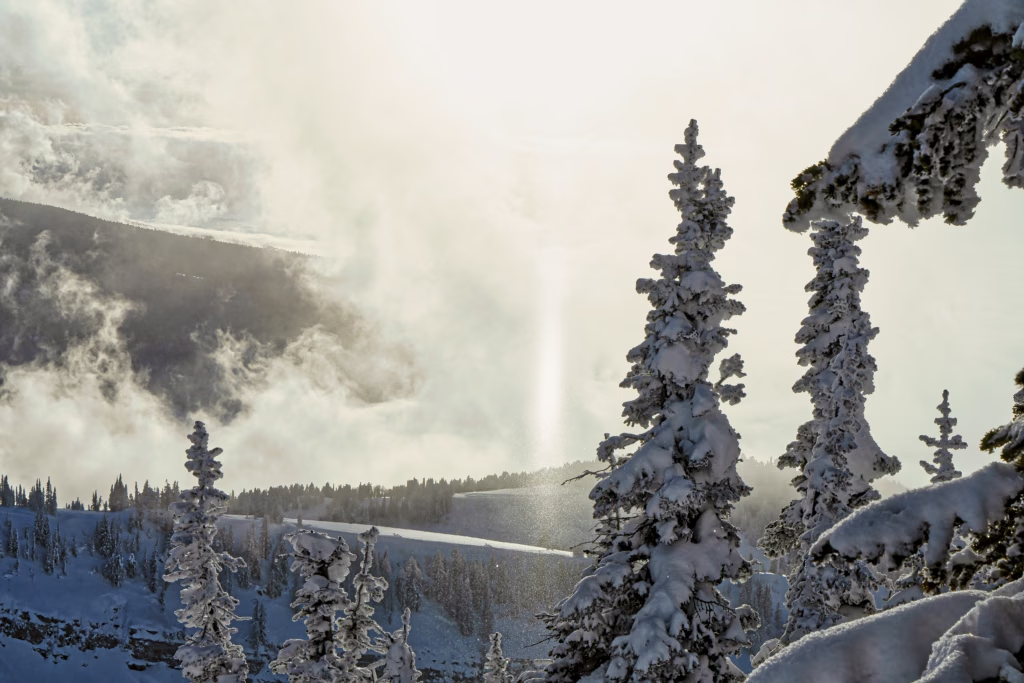
Grand Targhee, on the west side of the range, has its own winter mood. Storms often hit it first, and after a snowfall fog hangs in the trees long enough to turn a forest into a pencil drawing.
Planning a winter photo trip
Winter access is different from summer, so plan around the roads. In Grand Teton, the Teton Park Road closes to cars from November 1 through April 30 between the Taggart Lake Trailhead and Signal Mountain Lodge, and becomes a groomed route for skiers, snowshoers and walkers. Highway 26/89/191 along the east side of the valley stays plowed, so pullouts with a full view of the range are still a short drive from Jackson.
For Yellowstone, the drive from Gardiner into the Lamar Valley is the reliable option. The rest of the park opens to guided snowcoach and snowmobile trips once the winter season begins in mid-December, which is the way to reach Old Faithful and the geyser basins when they are steaming in the cold. Whichever you choose, check road conditions the night before and the morning of. Storms close roads quickly, and the best mornings often follow the worst nights.
Why winter imagery matters for lodges and brands
Most hotel and resort photo libraries are heavy on summer, yet winter is when many Jackson Hole properties work hardest to fill rooms. A handful of strong winter frames, the range at first light, snow on the trees outside a window, a fire inside, sell the season better than any rate card. If your property or outdoor brand is short on winter imagery, that is exactly the kind of shoot I plan. See hotel and hospitality photography or brand and ad creative.
The full set is in Winter in Yellowstone & the Tetons, and more from the parks is in Wildlife of the Tetons. Planning a visit in warmer months? Here are six Grand Teton spots for sunrise, portraits and proposals. If you have a project in mind, tell me about it.